War Does Not change.
War Does Not change.
In our modern age, with its ever shifting landscape and uncertainties, we often find ourselves feeling that our feelings are too specific and individual to our modern world that surely history can not advise us nor have enough to empathise with us closely enough to touch us now.
That's how I was feeling when I found myself in the archive of one of Birmingham's Victorian era newspapers.
Comparatively to its competitors of the time, I had found “The Gridiron” the odd one out, A 3 page spread, laid out out like courses at a restaurant. Little did I expect something so moving for my main course.
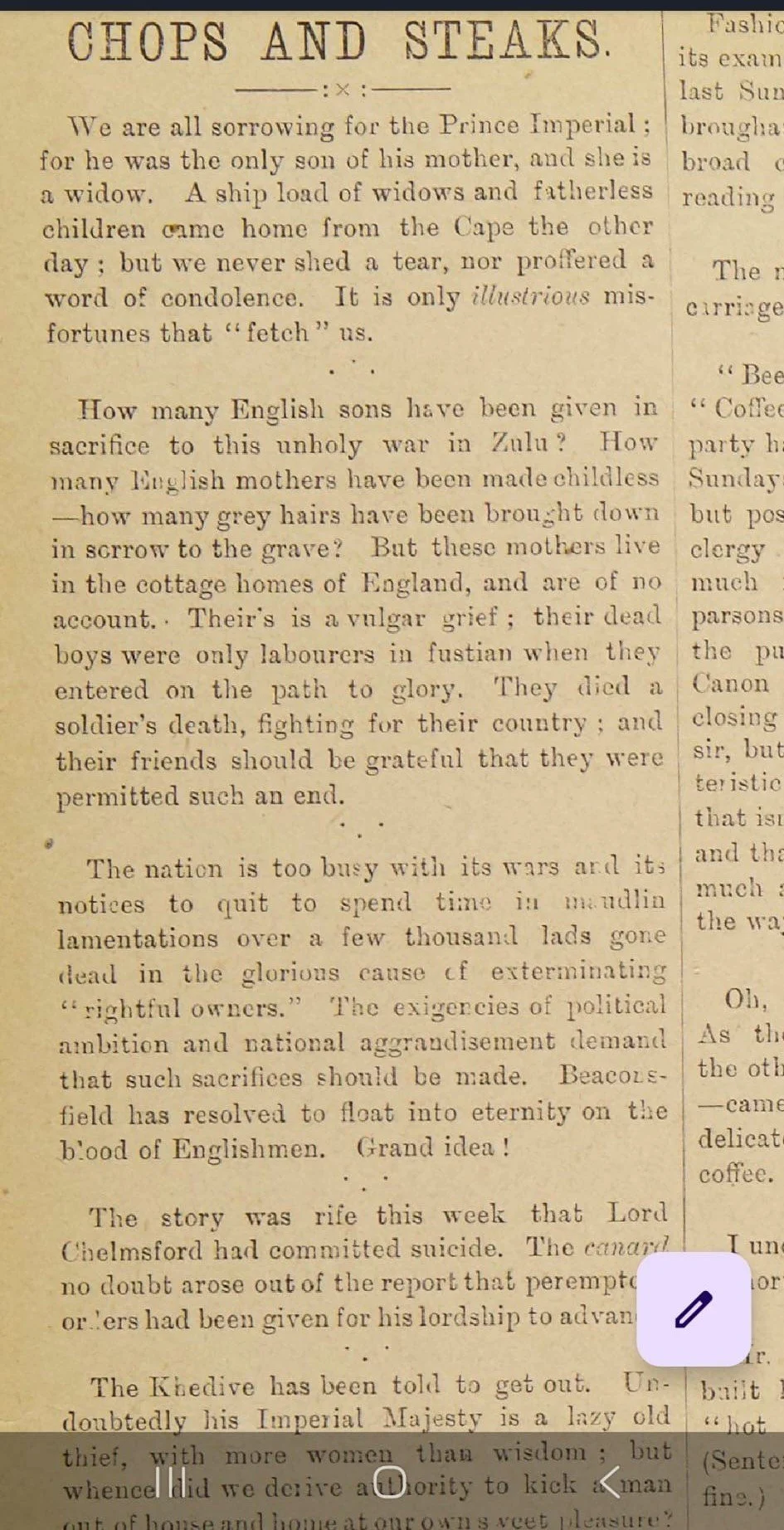
“CHOPS AND STEAK”
…A ship load of widows and fatherless children came home from the Cape the other day; but we never shed a tear, nor proffered a word of condolence. It is only illustrious mis-fortunes that "fetch" us.
How many English sons have been given in sacrifice to this unholy war in Zulu? How many English mothers have been made childless -how many grey hairs have been brought down in sorrow to the grave? But these mothers live in the cottage homes of England, and are of no account. Their's is a vulgar grief; their dead boys were only labourers in fustian when they entered on the path to glory. They died a soldier's death, fighting for their country; and their friends should be grateful that they were permitted such an end.
The nation is too busy with its wars and its notices to quit to spend time in mudalin lamentations over a few thousand lads gone dead in the glorious cause of exterminating "rightful owners." The exigencies of political ambition and national aggrandisement demand that such sacrifices should be made. Beacons field has resolved to float into eternity on the blood of Englishmen…”
This is a side of the former British empire I personally had not seen, the cost of being the world's superpower, not just paid in atrocities upon others abroad, but also its personal, local meat grinder that made mince meat of generation here at home, in Birmingham.
Its government did not care for its losses, but this article really brought home to me that for the mothers of the young men sent to fight cared, grieved, lamented for their loved ones, and the true feelings behind the Mask of Empire begin to shine through. We rarely see this side in official sources, with its triumphalism and glory often overshadowing this sad and personal cost, the Parades sending their boys off to war, yet never hear about these same lads returning home, or indeed not, afterwards.
The author clearly shows both his dismay as well as his views on the then ending angalo- zulu war, pointedly disagreeing its value of “exterminating” a country's “rightful owners” versus the cost of young lives, gray hairs and tears shed here at home. Both are abhorrent, the cost as well as the gain.
If even a local satire magazine from over 145 years can shine a light on the horrors of war, and to compare it to the ongoing conflicts going on around the world, some of whose goals still focus on their wars of extermination, it gives at least this author pause to reflect. Is any war ever worth the cost?